Field Test in Romania: Demonstrating SEBELO System Capabilities
1. Objective
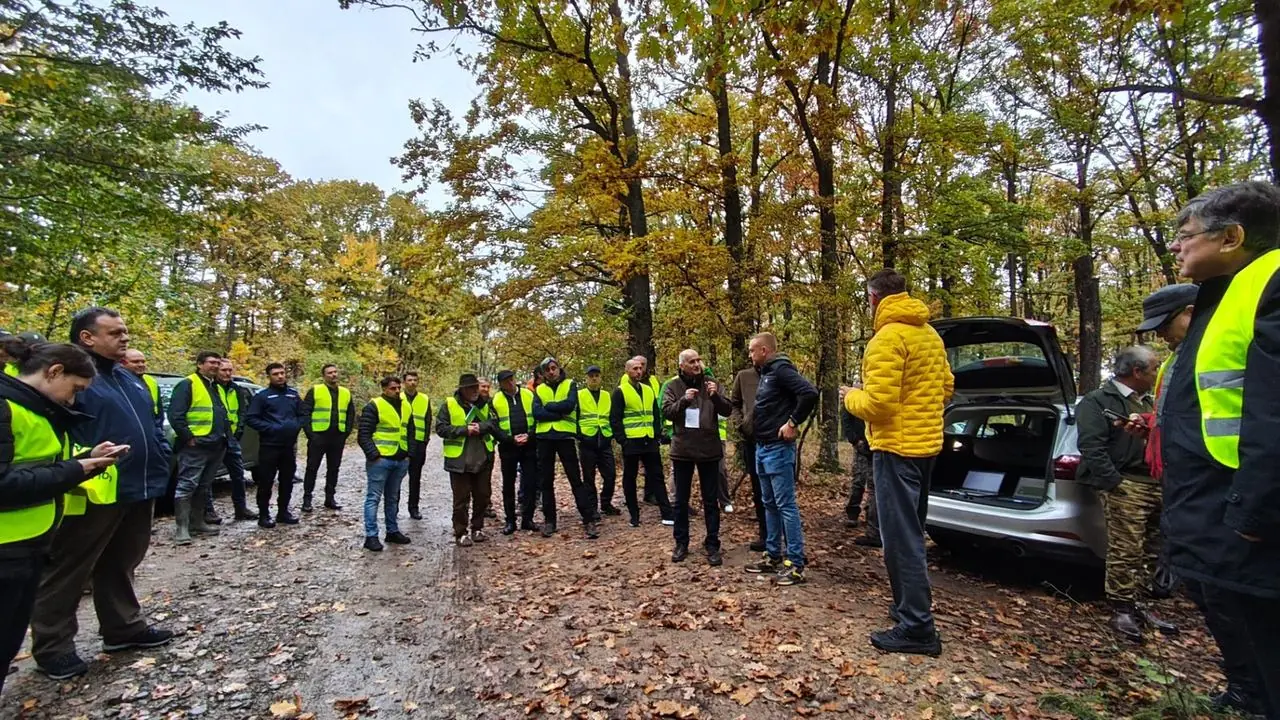
The primary aim of this demonstration was to evaluate the performance of the SEBELO sensor system under real forest conditions, specifically its ability to detect early smoke signals, assess detection timing, communication reliability, and overall responsiveness during a controlled fire simulation.
2. Infrastructure Setup
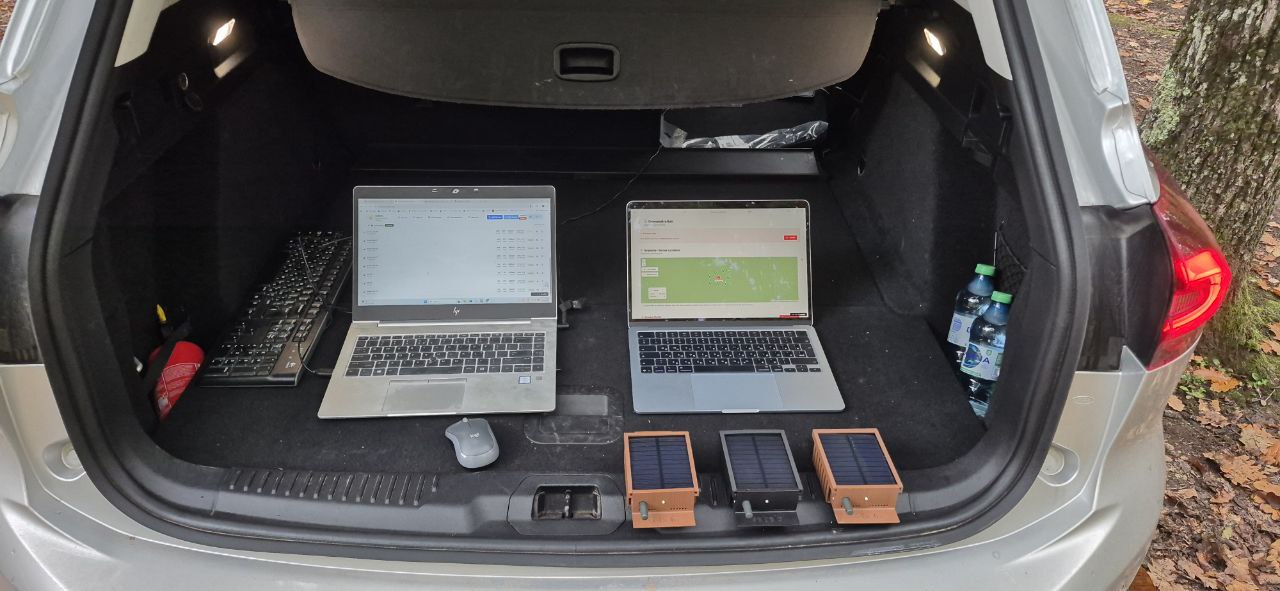
A temporary but fully functional sensor network was deployed during the field test, comprising the following components:
- LoRaWAN antenna installed on a tripod to ensure wide communication coverage in the test area
- MikroTik Gateway used for real-time data transfer to the SEBELO cloud platform
- Power for all electronics was supplied via a vehicle-mounted 220V inverter
- Data transmission and system status were monitored live throughout the test
3. Environmental Conditions
- Air Temperature: +8°C
- Humidity: ~62%
- Wind: 1.5–2.5 m/s (Southwest direction) - wind carried smoke along the terrain, influencing detection times based on sensor positioning
4. Demonstration Flow
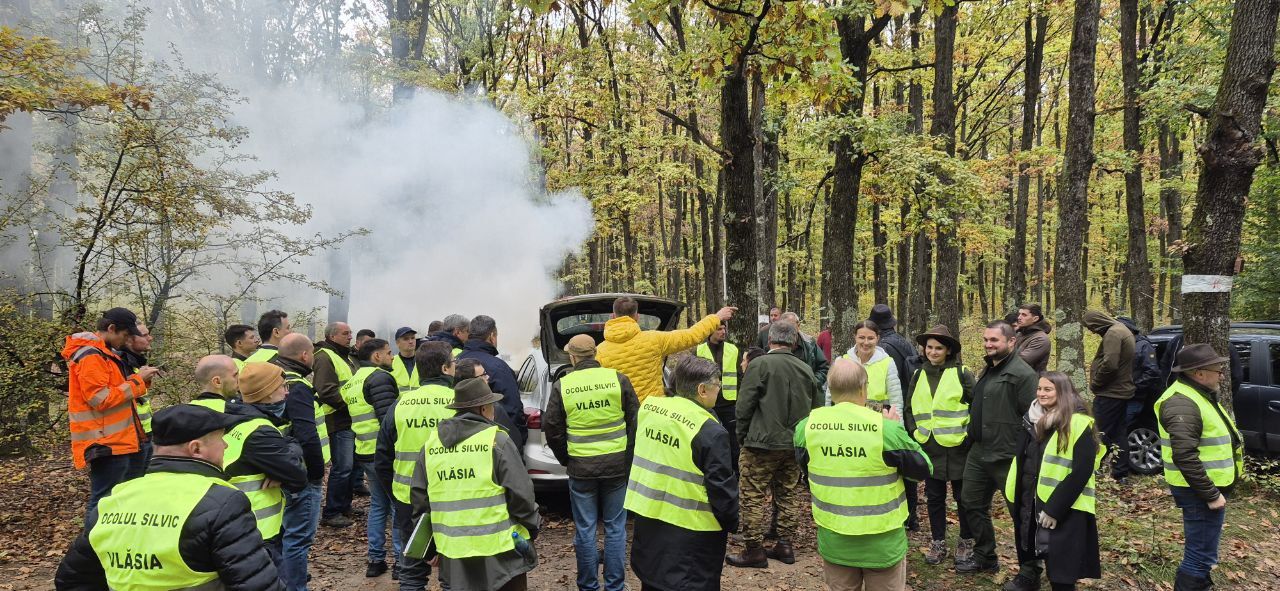
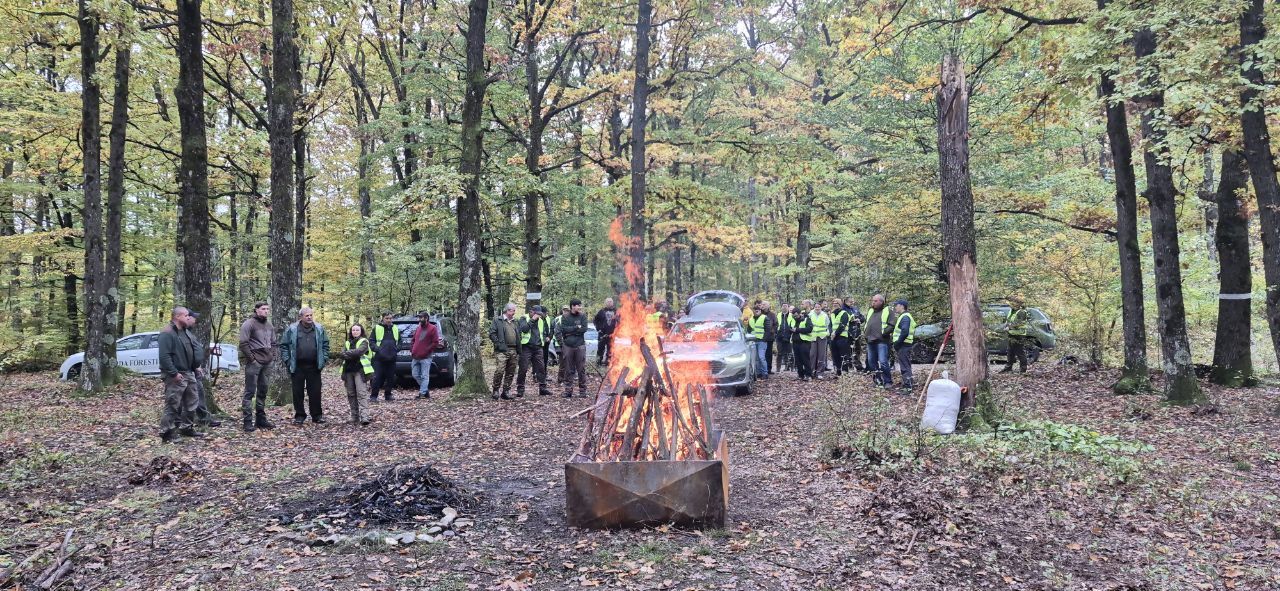
A controlled fire was ignited at 2:47:19 PM using dry twigs in a metal container to simulate a localized ignition event. Seven sensors were deployed at varying distances from the fire source (18m to 41m) to evaluate detection capabilities across different ranges.
5. Smoke Detection Results
The sensors successfully detected smoke with varying response times based on their position relative to wind direction: Sensor seb-10 (33m) detected smoke after 9 min 17 sec, Sensor seb-03 (25m) after 13 min 16 sec, and Sensor seb-16 (39m) after 17 min 04 sec. The remaining sensors retained "clean" status throughout the test, as they were positioned outside the smoke path.
6. Observations and Conclusions
- Detection latency correlated strongly with sensor position relative to wind direction
- The earliest detection occurred within 9 minutes, thanks to favorable smoke drift alignment
- Sensors located in the opposite direction of the smoke plume did not trigger, as expected—confirming proper selectivity
- The LoRaWAN infrastructure performed reliably, with seamless real-time communication to the platform
7. Technical Background
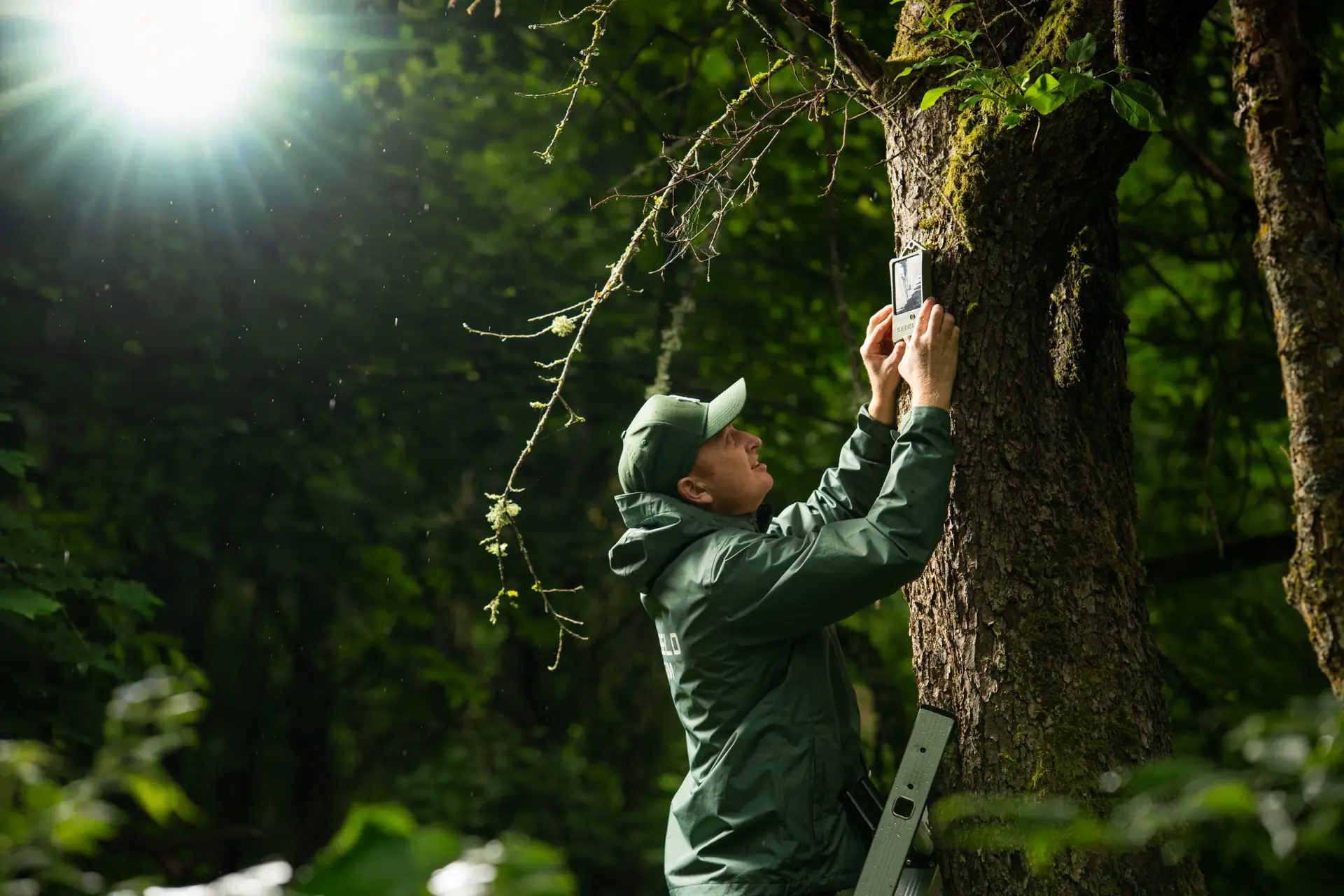
The deployed sensors utilize MOX-type VOC (Volatile Organic Compounds) detectors integrated with temperature, humidity, and pressure sensors. Key technical features include:
- AI-enhanced gas fingerprinting using trained neural network models
- Detection mechanism: sensors create a "chemical fingerprint" from a sequence of readings at different temperatures
- Real-time transmission upon detecting anomalies, plus periodic status updates every hour
- Ultra-low power operation on solar power and supercapacitors (no batteries), designed for up to 10 years of use
8. Final Summary
The SEBELO sensor system successfully detected early-stage smoke signals in a controlled forest environment. The demonstration proved the system's capabilities in:
- Accuracy in volatile organic compound (VOC) detection
- Stability in data communication
- Readiness for further field deployment under IT4EST project goals
SEBELO's solution demonstrates its potential to serve as a scalable, cost-efficient early wildfire detection system, critical in minimizing ecological damage and response time in Europe's most vulnerable forest zones.