Field Test in Portugal: Demonstrating SEBELO System Capabilities
1. Objective
The primary aim of this demonstration was to evaluate the performance of the SEBELO sensor system under real forest conditions at a public science center in Portugal — specifically testing the system's ability to detect early smoke signals, assess detection timing, communication reliability, and overall responsiveness during a controlled fire simulation.
2. Infrastructure Setup
A fully functional sensor network was deployed across the grounds of Centro Ciência Viva da Floresta, comprising 17 sensors in total. A key highlight of this deployment was its completely cable-free setup. The network was built around a Milesight SG50 remote gateway equipped with a solar panel, integrated battery, and built-in SMS module — meaning the entire system ran on renewable energy with zero wiring required.
The deployment process was remarkably straightforward:
- The gateway was placed in position and powered automatically via solar panel
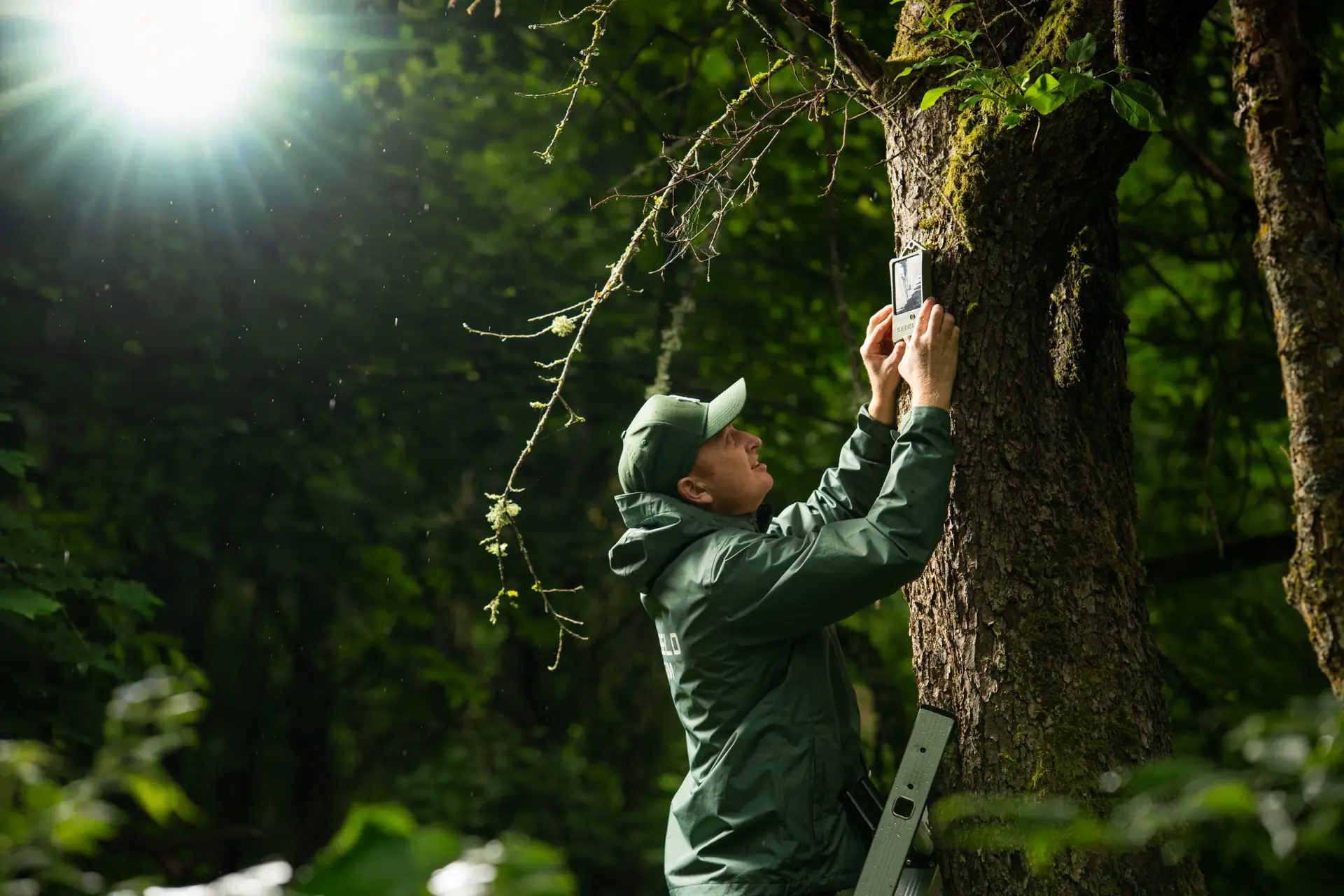
- Sensors were mounted on trees throughout the test area
- Upon powering up, all sensors connected to the platform automatically — no manual configuration needed
This plug-and-play approach demonstrates that SEBELO can be rapidly deployed in remote forest areas with no electrical infrastructure whatsoever.
3. Sensor Calibration
When sensors are transported to a new environment, they require time to acclimate and establish a baseline "clean air" fingerprint before reliable detection can begin. In Portugal, the calibration process went smoothly — after approximately 2 hours, all 17 sensors had stabilized and the system was ready for the test. This calibration phase is a standard and expected part of any new deployment.
4. Test Location
Centro Ciência Viva da Floresta, Estrada Nacional 241, Moitas, 6150-345 Proença-a-Nova, Portugal.
5. Environmental Conditions
- Air Temperature: ~13°C
- Wind Direction: Northwest (NW)
- Wind Speed: ~19 km/h
Wind conditions played a central role in the test. The steady NW breeze created a clear and predictable smoke corridor downwind from the fire source — directly influencing which sensors detected smoke and how quickly.
6. Demonstration Flow
A controlled fire was ignited using dry twigs, pine cones, and firewood logs. The fire size was intentionally kept small — under 1 m² — to simulate a realistic early-stage ignition event. Seventeen sensors were deployed at varying distances from the fire source, ranging from 10 m to 60 m, on both the downwind and upwind sides of the fire.
7. Smoke Detection Results
Wind direction proved to be the decisive factor in detection performance. Sensors positioned upwind of the fire — where the breeze was blowing from — recorded no smoke whatsoever, behaving exactly as expected. Sensors positioned downwind, in the path of the smoke plume, responded rapidly and precisely:
- First detection: 1 minute 37 seconds after ignition
- Maximum detection range reached: ~60 m, within approximately 2 minutes
- Total sensors triggered: 9 out of 17 — all located in the downwind corridor
The remaining 8 sensors, placed on the upwind side, retained "clean" status throughout the entire test — confirming the system's correct selectivity and eliminating false positives.
8. Observations and Conclusions
- Wind direction and speed are the primary factors governing detection timing and range — the system behaves as a directional early-warning network
- First detection under 2 minutes from a sub-1 m² fire demonstrates exceptional sensitivity
- The 60 m detection range was achieved within 2 minutes under 19 km/h wind conditions
- Upwind sensors showed zero false triggers, confirming precise VOC-based selectivity
- Zero-cable deployment completed in minimal time, confirming suitability for remote forest environments
- Automatic sensor-to-platform connectivity required no on-site technical configuration
9. Live Alert Demonstration
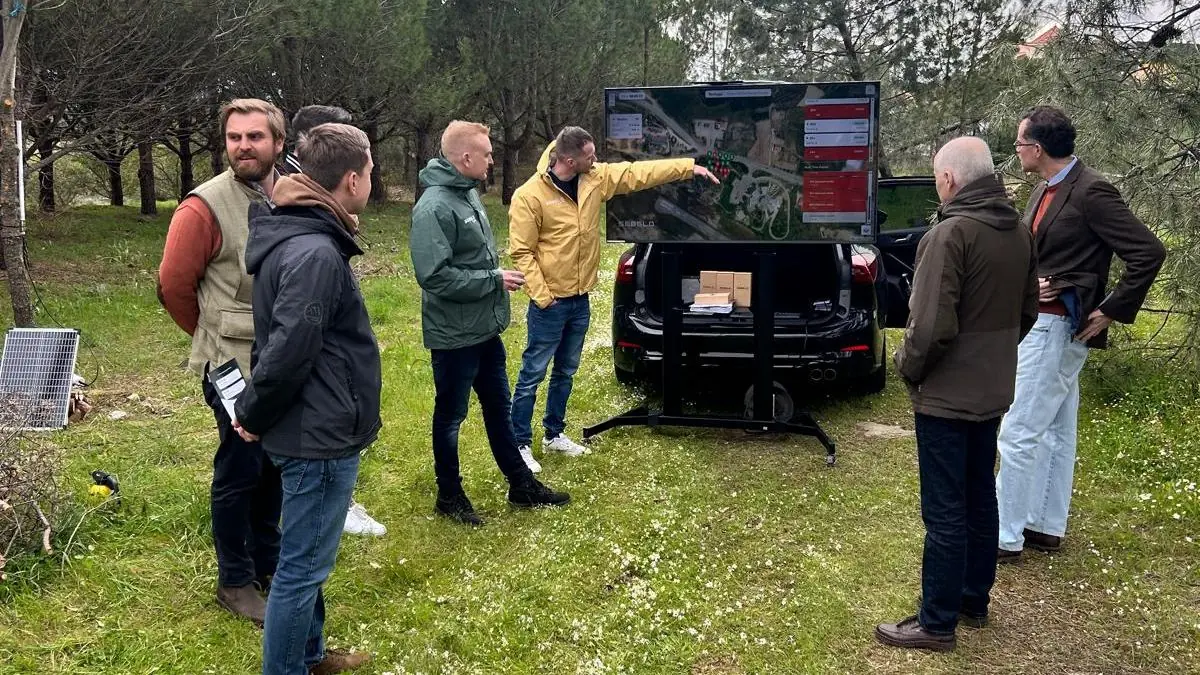
A unique aspect of the Portugal demonstration was the opportunity for all attendees to experience the SEBELO alert system firsthand. To make the system's behaviour as clear and intuitive as possible, a large-format TV screen was set up on-site, displaying a live map of the sensor network in real time. As sensors triggered, attendees could watch popup notifications appear on the map, see individual sensor statuses update, and follow the progression of smoke detection across the deployment area — making it immediately obvious which sensors had detected smoke, when, and at what distance from the fire source.
Participants were also invited to register their email addresses and phone numbers directly on-site, allowing them to receive real-time alerts on their own devices as the sensors triggered during the test.
The results were largely successful:
- Email alerts were delivered to all registered participants without exception
- SMS alerts were successfully received by all participants with EU-based phone numbers
- Participants with Portuguese phone numbers did not receive SMS alerts during the test
As the SMS notification module is currently in beta, we are actively investigating the cause of this discrepancy with Portuguese numbers and are committed to resolving it ahead of future deployments. Email alerts, however, performed flawlessly and remain a fully reliable notification channel across all tested regions.
10. AI Training & Data Collection
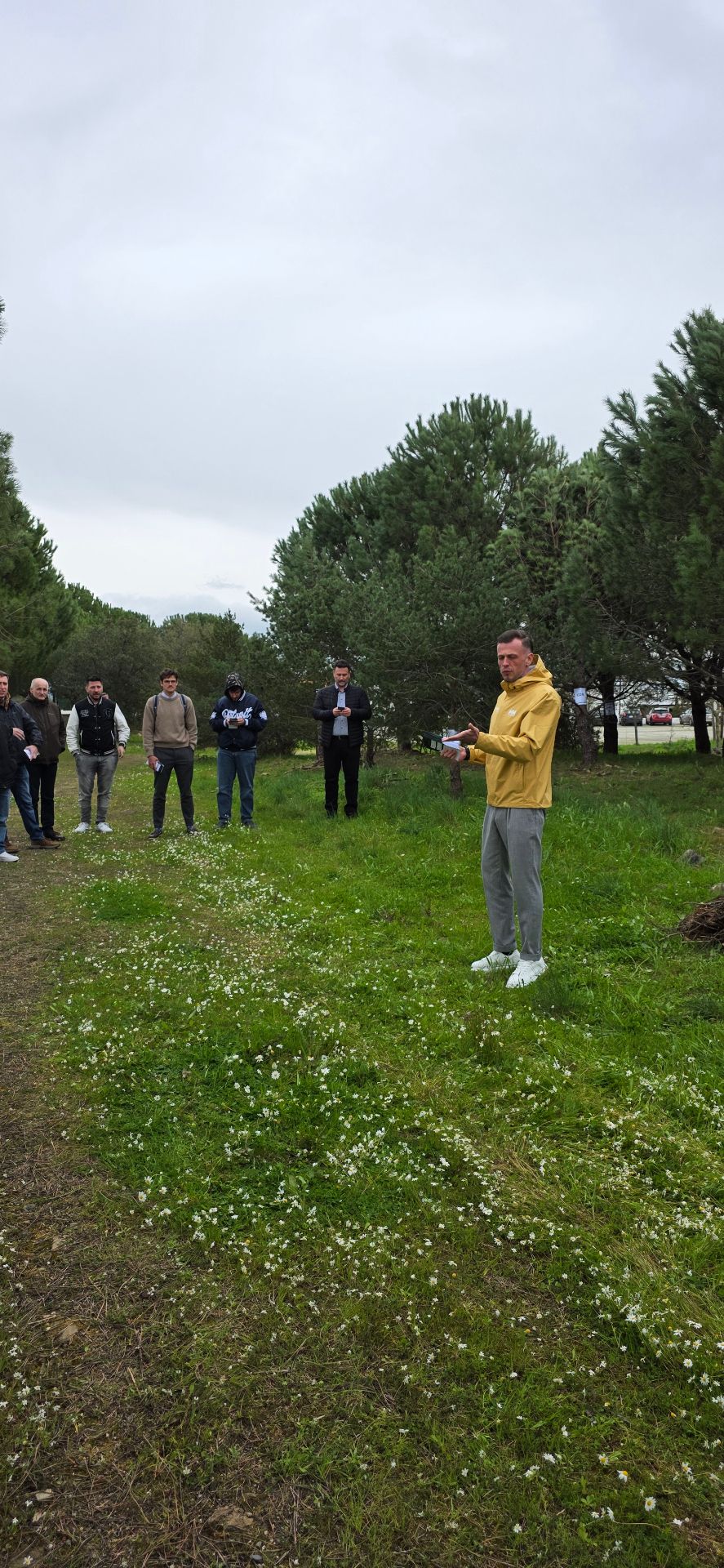
Prior to the controlled burn, the Portugal deployment served an additional and equally important purpose: data collection for AI model improvement. Environmental sensor readings gathered on-site were used to further train and refine SEBELO's detection algorithm, making it more accurate and robust across different weather conditions, geographic regions, and countries.
This is part of a continuous and systematic process — data is actively collected at every demonstration and deployment location. Each new environment enriches the training dataset, allowing the AI to build a broader and more universal understanding of what "clean air" looks like across Europe's diverse forest ecosystems. The result is a detection model that grows more reliable with every field test.
11. Technical Background
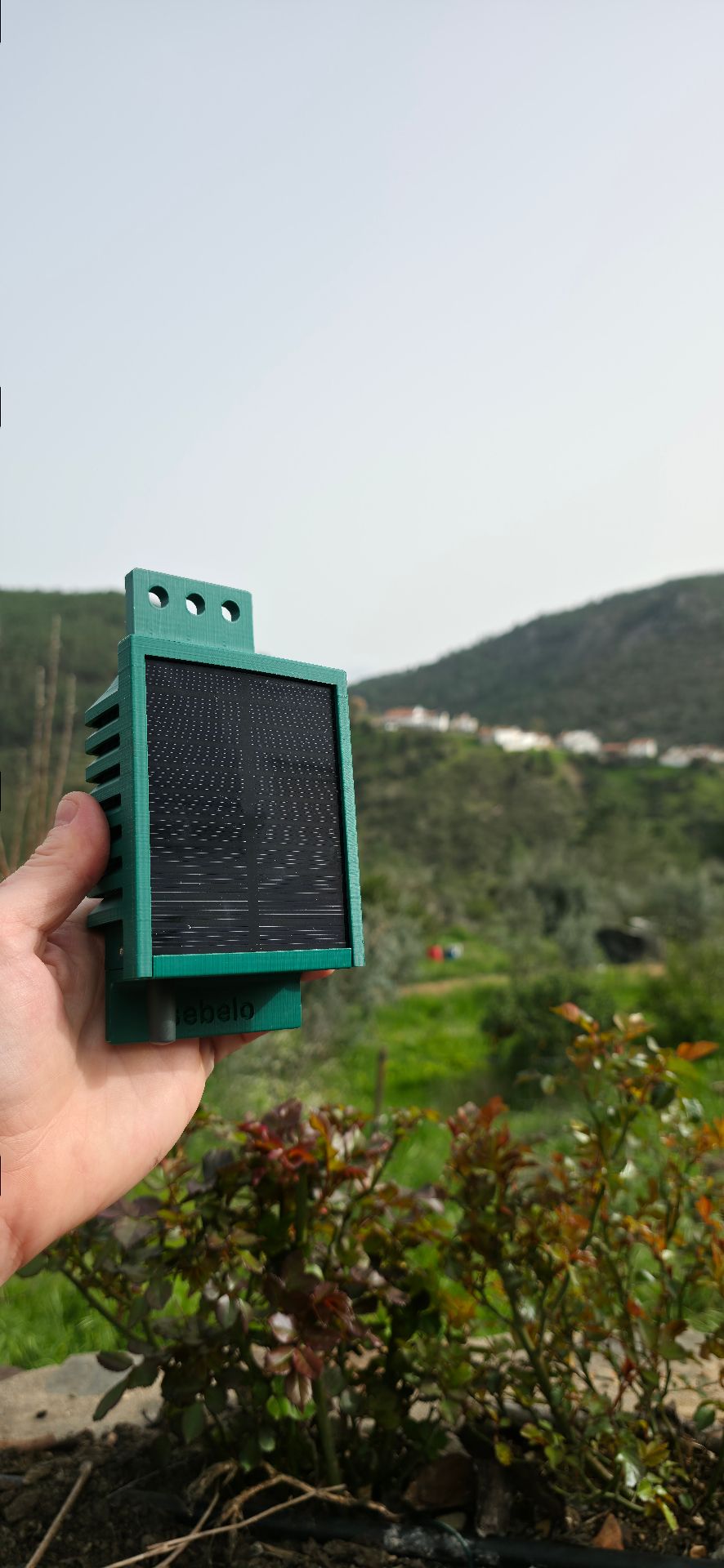
The deployed sensors utilize gas detectors integrated with temperature, humidity, and pressure sensors. Key technical features include:
- AI-enhanced gas fingerprinting using trained neural network models
- Detection mechanism: sensors create a "chemical fingerprint" from a sequence of readings at different temperatures
- Real-time transmission upon detecting anomalies, plus periodic status updates every hour
- Ultra-low power operation on solar power and supercapacitors (no batteries), designed for up to 10 years of use
12. Final Summary
The Portugal demonstration delivered the most compelling results to date. A small fire under 1 m² was detected in under 2 minutes at a distance of up to 60 meters — in a fully off-grid, cable-free deployment that required no technical expertise to install. The demonstration confirmed:
- Sub-2-minute detection from a small, early-stage fire
- Accurate, wind-aware sensor selectivity with zero false positives on upwind sensors
- Fully autonomous, solar-powered communication infrastructure
- Seamless automatic connectivity from sensor to cloud platform
- Continuous AI improvement through systematic data collection across all deployment sites
- Readiness for scaled deployment under IT4EST project objectives
SEBELO's solution continues to demonstrate its potential as a scalable, cost-efficient early wildfire detection system — critical for minimizing ecological damage and emergency response times across Europe's most vulnerable forest zones.