Guide
Grass burning fire risk: why spring grass fires reach forests and homes
7 min read

The fire risk of grass burning comes from how fast dry grass burns: last year's dead grass dries within hours of spring sunshine, and one gust of wind can push the flames into a forest edge, a shed or a house. In Latvia, where burning dry grass (kūlas dedzināšana) is prohibited, firefighters still put out 956 grass fires in 2025. The safest way to clear land is to mow it, ideally in autumn, so there is nothing left to burn in spring.
What grass burning is, and why people still do it
In many rural areas of Northern and Eastern Europe, people used to set fire to last year's grass in early spring to "clean" meadows, ditches and abandoned fields. In Latvia the practice is called kūlas dedzināšana. The custom is fading, but neglected land keeps it alive: Latvian fire officials name unmown, overgrown land as a main cause of last year's grass fires.
Two beliefs make people reach for matches: that ash fertilises the soil and that burning gets rid of ticks. Experts quoted by Latvian public media say neither is true. Other fires are not planned at all: a grill, a cigarette butt or a pile of burning branches is enough when the grass around is dry.
Grass fires in Latvia: the numbers
The State Fire and Rescue Service (VUGD) publishes the count every year. After two quieter years, the number of grass fires more than doubled in 2025. They burned 689 hectares, injured one person, destroyed 17 buildings or structures and set another 30 alight. Latgale was hit hardest, with 277 fires and 415 hectares; Daugavpils (70), Augšdaugava municipality (65) and Riga (58) had the most fires.
| Year | Grass fires put out by VUGD |
|---|---|
| 2021 | 1,161 |
| 2022 | 1,454 |
| 2023 | 752 |
| 2024 | 440 |
| 2025 | 956 |
The numbers swing with the weather. A cold, wet spring that greens the grass quickly means fewer fires; a dry, sunny March means more. In 2026 the first grass fire was recorded on 6 March, and by mid-April firefighters in Latgale alone had answered more than 200 calls.
Grass burning fire risk: how fires spread to forests and buildings
Dead grass is a fine, airy fuel. It holds little moisture, catches fire easily and burns in a fast-moving front. That is why a fire that someone believes is under control rarely stays that way. VUGD warns that grass fires spread quickly and change direction, so they cannot be reliably controlled.
- Wind carries sparks. In one April 2026 case in Latgale, a woman burning branches near apartment blocks said a sudden gust blew sparks into dry grass; the fire flared up again after it had been put out.
- Field edges lead into young forest. The same spring, a grass fire in Zvirgzdene parish spread into a young forest stand. Young stands with grass between the trees are especially easy for fire to enter.
- Sheds and fences stand in the grass. In 2025, grass fires destroyed 17 buildings or structures in Latvia: firewood sheds, barns, garages and fences close to unmown land.
- Smoke harms health. Researchers at Rīga Stradiņš University point out that the fine particles in the smoke (PM2.5 and PM10) reach deep into the airways, and some of the substances released are carcinogenic.
For a closer look at fuels, weather and how a small flame becomes a forest fire, read how wildfires start and spread.

Damage to nature: what burns along with the grass
Burning does not "renew" a meadow. VUGD notes that grass fires destroy valuable plants, insects, small animals and birds' nests. Early spring is exactly when many ground-nesting birds start breeding and insects overwinter in the dead grass. The Latvian Fund for Nature (LDF) and botanists warn that regular burning harms biodiversity in the long run. Where a habitat really needs fire as a management tool, the burn has to be agreed in advance with the Nature Conservation Agency (DAP) and VUGD.
Grass burning and the law in Latvia
Burning dry grass is prohibited. Under Section 34(3) of the Fire Safety, Firefighting and Rescue Law, the fine is €280–700 for individuals and €1,400–4,300 for legal entities. The fine can apply to the landowner even when someone else lit the fire, if the land had not been cleared. Farmers also risk lower area payments from the Rural Support Service (LAD) if burning is found on their fields, and municipalities may set a higher property tax for neglected land.
Forests have their own rules. Since 2025 the forest fire-unsafe period in Latvia runs from 1 April to 30 September every year, and any burning in the forest needs prior approval from the local office of the State Forest Service (VMD). The State Forest Service estimates that about 90% of forest fires start through human action or inaction. By 20 May 2026 it had already put out 169 forest fires covering 170 hectares, more than twice the 73 hectares burned in the whole of 2025.
How to prevent grass fires on your land
- Mow in autumn. Grass that is cut and removed before winter leaves nothing to burn in spring. Autumn is the best time to plan it.
- Clear the edges first. Keep strips along forest edges, roads, railways, fences and buildings mown short, and remove brush piles and rubbish.
- Never burn to clean land. Compost cuttings, chip branches or take them away. If a habitat needs a controlled burn, agree it with DAP and VUGD.
- Be careful with grills and bonfires in dry, windy weather, and never leave them unattended.
- Watch the land you cannot see. Fires on remote plots are often reported only when they are already large. On larger properties, smoke and gas sensors along forest edges and paths can send an alert to your phone as soon as a fire starts. See how this works for private property and for forest wildfire detection.

What to do if you see a grass fire
- Call 112 at once. Give the exact place, your name and phone number, and answer the dispatcher's questions.
- Do not stamp on the flames. If the fire is small and you can act safely, use water, sand or a leafy branch, and stay on the burnt side, 1–2 metres from the flames.
- Watch the wind. Grass fires can change direction quickly. Never stand downwind of the fire, and leave if the smoke or flames come towards you.
- Stay until the crew arrives if you can do so safely, and show them the way.
Why early detection matters for grass fires
Grass fires are often reported late. Residents tend to call only when the fire is already large or close to buildings, and the people who start them often leave before firefighters arrive. The gap between ignition and the first call is the time in which a grass fire can reach a forest stand.
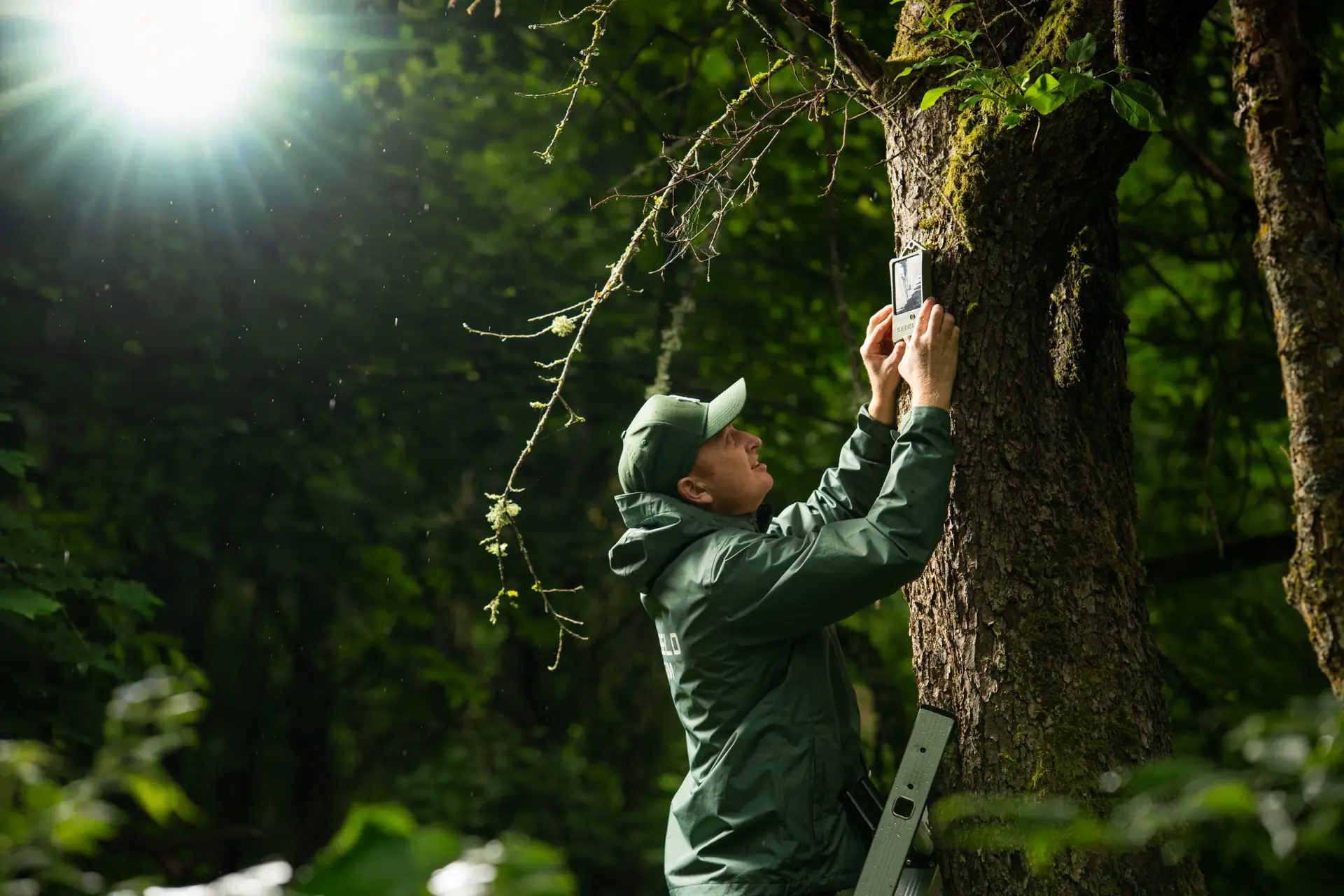
This is the gap ground sensors are built to close. SEBELO's solar-powered sensors hang on trees at forest edges, near roads, railways and villages, measure smoke and fire gases on the spot and send alerts through a LoRaWAN gateway to the cloud platform, which notifies the right people by app, e-mail or SMS. We have shown the system with live fires in front of fire services in France, Spain and Portugal; the comparison of early wildfire detection methods explains where sensors fit next to cameras and satellites.
Frequently asked questions
Is grass burning allowed in Latvia?
No. Burning dry grass is prohibited in Latvia. Under Section 34(3) of the Fire Safety, Firefighting and Rescue Law, individuals can be fined €280–700 and legal entities €1,400–4,300. The landowner can be fined even if someone else lit the fire, when the land had not been cleared.
Does burning old grass make the soil more fertile?
No. Experts quoted by Latvian public media say that the idea that burning grass fertilises the soil, or that it gets rid of ticks, is a myth. Burning destroys plants, insects, small animals and birds' nests, and regular burning harms biodiversity. Mowing and removing the grass is the safe alternative.
Why do grass fires spread so fast?
Dead grass is a fine, dry fuel that catches fire easily and burns in a fast front. Spring sunshine dries it within hours, and wind pushes the flames and carries sparks forward. That is why VUGD warns that grass fires change direction quickly and cannot be reliably controlled.
When is the best time to clear dry grass?
In autumn. Grass that is mown and removed before winter leaves nothing to burn when the snow melts. VUGD advises mowing and removing litter in good time, because grass on cleared land cannot burn. Keep strips along forest edges, fences and buildings especially short.
What should I do if I see a grass fire?
Call 112 straight away and give the exact location, your name and phone number. If the fire is small and you can act safely, use water, sand or a branch from the burnt side, 1–2 metres from the flames. Do not stamp on the flames, and stay out of the wind's path.
Sources
- LV portāls / VUGD — Kūlas ugunsgrēku skaits aizvadītajā gadā atkal pieaudzis (12 March 2026)
- LSM — No spring without grass fires in Latvia (18 March 2026)
- LSM — Šopavasar Latgalē jau 200 izsaukumu dzēst kūlas ugunsgrēkus (16 April 2026)
- LSM — Kādu sodu var dabūt par kūlas dedzināšanu un kāpēc tā nav teritorijas sakopšana (11 April 2026)
- LV portāls / Valsts meža dienests — Līdz 20. maijam dzēsti 169 meža ugunsgrēki (20 May 2026)